


Tue 20 / 10 / 26
Always needed, never wanted
First Aid is something every workplace needs, but why do so few people actually want to do it? October Breakfast sponsor Jenny Legg, Director at Training Legs First Aid, explores why we’re reluctant to become first aiders, how training can be made memorable, and why having the confidence to step forward could one day save a life.
By Jenny Legg of Training Legs First Aid
I have a slightly unusual problem in my business.
Everyone agrees that what I do is important. Almost nobody actually wants to do it!
I teach First Aid…
Ask a room full of people whether First Aid is important and I'm fairly confident every hand will go up. Ask the same room who would like to volunteer to be a first aider and suddenly people glaze over, avoid my eyes and become extremely interested in something on the floor.
Why?
First Aid has become firmly lodged in the “health and safety tick-box” category, and it makes me weep: something every business must have, someone must do, and a certificate that must be renewed every three years.
And, frustratingly, people assume it's going to be boring.
One of the most common things I hear at the end of a course is:
"I wasn't looking forward to today, but I actually really enjoyed it."
I'm never entirely sure whether to be delighted or offended.
Because First Aid isn't boring! I promise!
There are bodily fluids, stories of heroic acts and life-and-death situations in everyday places. We talk about seizures, collapsing, things being stuck in places they shouldn't be and what to do when… Somebody… Suddenly… Stops… Breathing…
Our job is to recognise something is wrong, help and look after that person until the professionals take over.
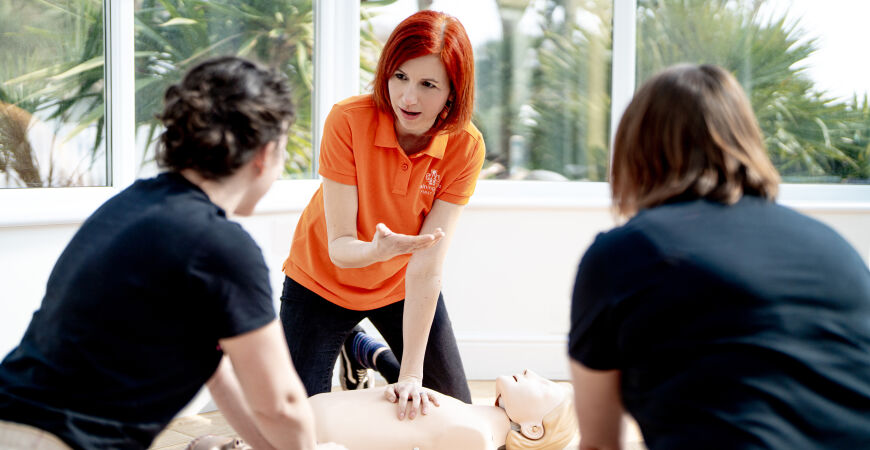
The language in training is simple and sometimes a little silly, but that's deliberate. In a real emergency, you're unlikely to remember page 47 of a first aid manual. You might, however, remember "Hello, Cheeky" to put someone into the recovery position!
Making training memorable helps people remember what to do when they're up against it.
First Aid keeps changing too. Through my charity, Bra Off Defib On, I've been proud to help get bra removal addressed in RCUK guidance, helping prepare people for the realities of using a defibrillator on a bra wearer — even the bits that might feel awkward or uncomfortable. Bare the Chest to Save the Rest.
I teach something I genuinely hope you never have to use.
You could sit on a First Aid course today and not need those skills for years. It might be two and a half years before something happens. (Hence the renewal every 3 years).
Then, one completely ordinary Tuesday, someone has a seizure. Your child starts choking. A colleague cuts themselves badly. Someone doesn’t get back up…
And suddenly that First Aid course you weren't particularly looking forward to becomes incredibly important.
Because that's the strange thing about First Aid: you need to know it before you know you're going to need it.
It's better to know it and not need it than need it and not know it.
So why are we so reluctant?
Is it the responsibility? Fear of getting it wrong? Blood? Giving up a day for training? The thought that it'll never happen? Burying... Your… Head… In… The... Sand…
Some workplaces struggle so much to recruit first aiders that they offer additional payments or incentives to take on the role.
That fascinates me. Because when something happens, nobody thinks the first aider is boring then. Everyone wants the person who knows what to do.
In the UK, survival from an out-of-hospital cardiac arrest remains around 10%. Yet in Norway, for example, CPR is started on 78% of cardiac arrests before an ambulance arrives. Lifesaving skills are more embedded in everyday culture there. Perhaps we simply haven't created a culture where learning how to help feels normal.
First Aid is dynamic, practical and sometime messy. It's about decision-making, communication, confidence and human behaviour. Done properly, training gives ordinary people the confidence to step forward when everybody else might step back.
I call my first aiders everyday life-saving heroes.
Because the real value of First Aid training isn't the certificate hanging on the wall. It's having somebody there who knows what to do when another human being needs help.
And how much is another human life worth?
So, I want to ask Brighton's business community something to stop me weeping into my cereal:
What would motivate you to become a first aider?
If your workplace asked for volunteers tomorrow, would you put your hand up?
And if the answer is no, I'd really love to know why.
Perhaps if we understand why something so universally needed is so rarely wanted, we can change the way we think about First Aid — and create a few more ‘Everyday Life-saving Heroes’ along the way.
Jenny Legg is the Director of Training Legs First Aid. Find out more here.
You might also like:
If you want to contribute to the Chamber blog, contact us on hannah@brightonchamber.co.uk